
Custom Machining Services Cost in 2026: A Buyer's Cost Model Where Design Sets the Price
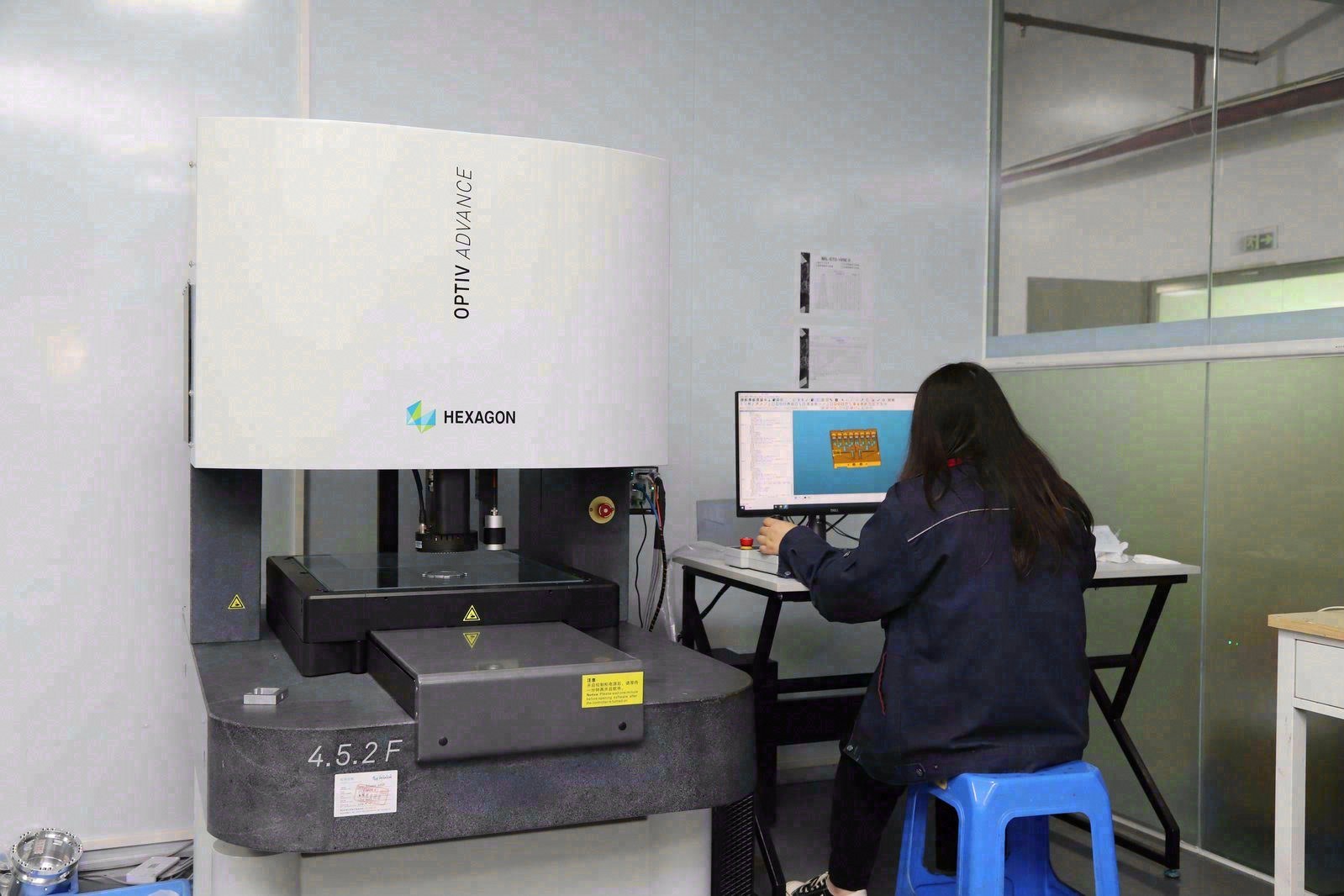
Custom machining services are priced in two places: the design review and the quote. The design review is where most of the cost is decided, because a drawing that respects standard tooling, standard tolerances, and machinable geometry is a cheap part waiting to happen, while a drawing that fights the process is an expensive part regardless of the shop. On this floor every quote starts with an engineer reading the geometry — not a sales rep guessing a price — because the review is where the cost structure becomes visible.
What does a custom machining service quote actually contain?
Every honest quote is the same five lines, and the first decision in every one of them is the design. The lines do not change between suppliers; what changes is which ones are itemized and which are absorbed.
| Line item | What it pays for | What moves it |
|---|---|---|
| Material stock | The bar, plate, or billet at the grade on the drawing | Grade, temper, and traceable certified lots |
| Machining time | Spindle minutes to remove material and hold features | Feature count, material toughness, and tolerance per feature |
| Setup and programming | Fixturing, toolpath work, first-piece prove-out | A one-time cost per order that dominates small quantities |
| Finishing and special processes | Anodizing, passivation, plating, heat treatment | Metal-specific and dimension-changing; a line of its own |
| Inspection and documentation | CMM time, dimensional reports, material certificates | Each tight feature and GD&T category adds measurement and proof |
No honest service quotes a price before the drawing has been read, because the drawing is where the price is written. The structure is the same at every shop; the differences show up in how carefully the review is done and how honestly the lines are listed.
Why does the design decide most of the price before the first cut?
Design decides the great majority of a machined part's cost, because the drawing sets every variable the machine will obey. Wall thickness decides whether the part flexes under the cutter; hole depth decides whether a drill wanders; internal corner radius decides whether a standard end mill can reach the feature or a second process is needed; thread depth decides how much tapping risk the cycle carries. A drawing that respects these rules is cheap to hold at ±0.003 mm; one that ignores them pays for the fight and still risks the part. That is why the design-for-manufacturing review belongs before the quote, not after it: the review flags the features that are tighter than the function needs and the geometry that fights the tool, and each flag is a cost reduction made on paper instead of on the floor. The review also reads the tolerance callouts feature by feature: a position tolerance on a hole pattern, a flatness on a mating face, a surface finish on a sealing surface each point to a process and an instrument, and each adds its own line. A drawing that arrives reviewed is a drawing whose quote already reflects the cheapest way to hold what the function needs. The second-order cost of a design mistake you do not catch is larger than the first-order one — a bad drawing costs you the machining, then the inspection, then the rework, then the schedule — which is why reviewing the drawing first is the cheapest part of the whole purchase.
How much does the tolerance on the drawing move the price?
Machining cost is nonlinear in tolerance. Moving a feature from ±0.1 mm to ±0.003 mm can more than double the price, because the machine, the setups, the tooling, and the inspection method all change at once. Dropping a critical surface to ±0.002 mm moves it to grinding, a separate process family. On the floor behind this site, milling and turning hold ±0.003 mm on critical features and precision grinding reaches ±0.002 mm, with process capability tracked at Ppk ≥ 1.67 at the initial study on key characteristics and Cpk ≥ 1.33 on general characteristics. Capability is reported per characteristic: every report names the feature, its tolerance band, the sample size, the sigma method, and the study window. And critical geometry verified on Hexagon CMMs. Reserve the tight band for the features that engage another part, put the rest on the general block, and let ISO 2768 carry the dimensions that do not need a callout — a drawing that marks only what matters is a drawing whose price does not carry dead weight. Measurement scales with the band: a general feature is checked with hand tools, a ±0.003 mm feature needs CMM time against your datum scheme, and a ground seating surface needs a roughness instrument. Ask what will be measured and what the report will contain, and ask to see a sample CMM report from a completed job before you compare totals — the report is the only part of the tolerance you can audit after the parts ship.
Which features and materials should the budget assume?
Features price a part feature by feature. Holes, threads, pockets, and slots each add a tool pass, and a thread or an internal feature specified carelessly adds a cycle or a second operation. Standardize hole sizes, thread forms, and radii, and the quote follows. Material prices the part twice: as stock and as machining time. Aluminum 6061 is the least expensive precision metal to machine and the default for housings and brackets; free-machining grades such as 303 stainless or 12L14 steel keep turned parts economical, while tougher grades — 304, 316, titanium — cut slower and wear tools, with titanium and premium plastics such as PEEK at the top of the ladder. The material also sets the finish: anodizing for aluminum, passivation and electropolishing for stainless, each with an allowance that changes the final size, so the grade and the finish belong on the first quote, not the fifth revision. The shop behind this site runs 100+ machines across milling, turning, mill-turn, Swiss-type turning, and grinding in a single 6,800 m² facility, which keeps the process route under one roof and the finishing bundled — a handoff you can name instead of a vendor you cannot.
How do quantity and service model change the unit price?
The one-time lines — setup, programming, fixturing, first-article inspection — are fixed whether you order one part or a thousand, so a prototype carries them all on one piece. That is why prototype prices look expensive and why comparing them to production without the quantity context misleads. This site runs three service models — prototype, low-volume, and production — with MOQ 1 piece, so you can quote the stage that matches your need and see the fixed lines spread as the volume rises. Between the prototype and the production run sits the bridge quantity — a handful of parts that exercises the process and the inspection loop before you commit volume. Lead time tracks the same process count, roughly 3 days for simple parts, 7 days for standard parts, and up to 30 days for complex parts with many steps or finishing. When the date and the price come from different process counts, the quote is describing two different parts — ask the supplier to reconcile them before you budget. And when a drawing revision lands, every revision triggers a new first-article check, so the revision loop is part of the prototype budget; a supplier that prices the loop as its own line is showing you the real cost of learning.
What should a machining-service quote itemize so you can compare suppliers?
A quote you can compare states its assumptions. Make sure each supplier shows the material grade and how the lot is verified, the tolerance and GD&T it will actually hold per feature, the process route for each feature, the finishing included and who performs it, and the quantity tier with prototype and production separated. When a line is missing, assume the cost is hiding rather than absent. A quote that absorbs inspection into the margin is a quote you cannot compare, and a quote that does not name the process behind a tight feature has not priced the tolerance at all. The supplier's DFM discipline is part of the comparison too: ask to see what its review flagged on a recent drawing, because a supplier that reviews honestly before quoting is a supplier whose number already has the design mistakes taken out of it.
How do you build a 2026 custom-machining budget you can defend?
Build the budget the way the shop reviews the part — design first, material second, quantity third.
- Get the DFM review before you fix the number. Send the drawing and ask the supplier to flag the features that are tighter than the function needs, the geometry that fights the tool, and the finish that will change the final size. Fix the drawing first; then budget the fixed drawing, not the first draft.
- Quote the prototype at MOQ 1. One piece, on the same machines and tolerances as production, with first-article inspection. The prototype quote is the honest anchor: it shows the fixed costs at full weight and proves the drawing is machinable and measurable as written.
- Quote the low-volume and production tiers on the same page. The same supplier gives you the unit price at your planned quantity with the fixed lines amortized, plus the lead-time tier your process count earns. Compare suppliers only when all quotes state the same tolerance scope, material grade, and finishing plan.
Keep the closing rule in front of you: the cheapest quote is rarely the cheapest part in service, because the design mistakes you do not catch in review become the scrap, rework, and schedule you pay for later. Review the drawing first, and the 2026 budget you build will survive contact with the floor.
Frequently Asked Questions
How much do custom machining services cost in 2026?
No honest shop quotes a price before reading the drawing, because the design decides most of the cost. Beyond the drawing, the price is set by the material grade, the tolerance per feature, the process count, and the quantity. A simple reviewed 6061 part at production quantity sits low; an unreviewed drawing in a tough grade at prototype quantity sits far higher. Review the drawing before you compare quotes, and the range you have to compare shrinks to the honest part of it.
Why does design decide most of a machined part's cost?
Because the drawing sets wall thickness, hole depth, corner radius, thread form, and tolerance — every variable the machine obeys. A drawing that respects standard tooling is cheap to hold; one that fights it pays for the fight and still risks the part.
What tolerance can custom machining services hold?
Milling and turning hold ±0.003 mm on critical features; precision grinding reaches ±0.002 mm for sealing and seating surfaces, with process capability tracked at Ppk ≥ 1.67 initial under SPC and critical geometry verified on Hexagon CMMs.
What is the minimum order, and what service models exist?
MOQ is one piece, with prototype, low-volume, and production service models, so you can validate on a single part, run a bridge quantity, or scale to volume without re-sourcing the geometry.
What is your lead time, and does it affect the price?
Lead time tracks process count: roughly 3 days for simple parts, 7 days for standard parts, and up to 30 days for complex parts with many steps or finishing. Price and lead time should come from the same process count; a quote that prices one and dates another should be questioned.
Which materials do you machine, and which is cheapest?
Aluminum 6061 and 7075, stainless 303, 304, 316, and 17-4PH, carbon and alloy steel, brass, copper, titanium, and engineering plastics including PEEK and POM/Delrin. Aluminum 6061 and the free-machining grades are the least expensive to machine. Every lot is verified against its mill certificate before cutting.
Which certifications back the service?
IATF 16949 (product design excluded) automotive-grade process control — SPC, PPAP, FMEA, and lot traceability — applied to every part, alongside ISO 9001 and ISO 14001 under third-party surveillance. Ask for the certificate numbers and check them with the registrar; the numbers are part of the evidence, not decoration.
Want a quote that starts with the drawing, not the price?
Email the STEP or IGES model, the material grade, and the toleranced 2D drawing to [email protected] or call +86 13126536955. You will get a design-for-manufacturing review that flags the cost drivers on the drawing, and an itemized quote with the prototype and production tiers on the same page.