
- DFM review first. Every quote starts with an engineer reading your geometry, not a sales rep guessing a price.
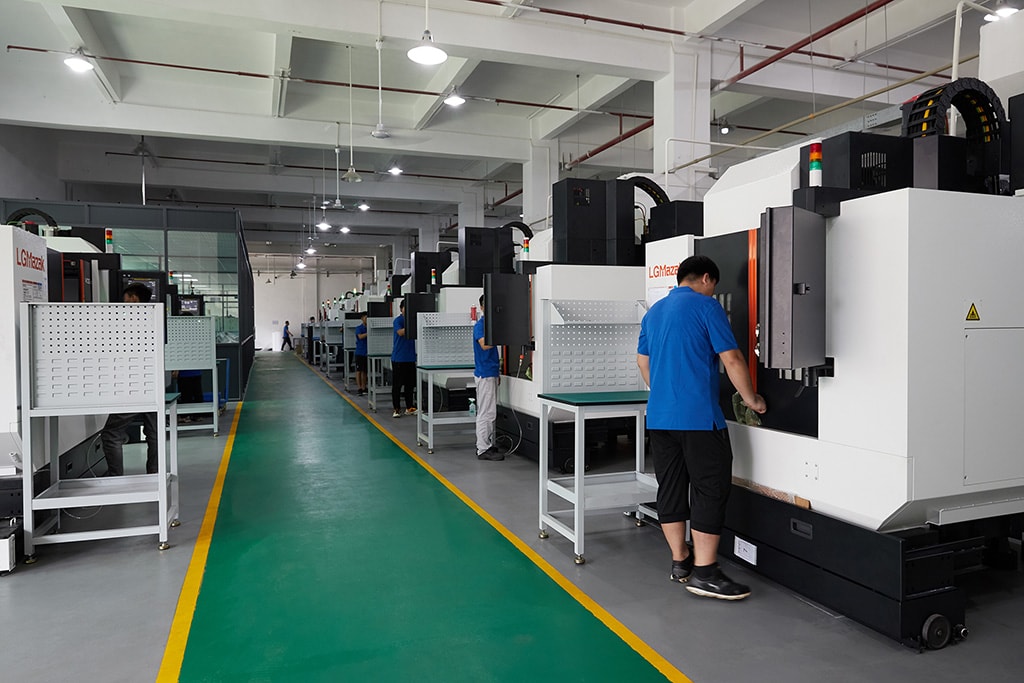
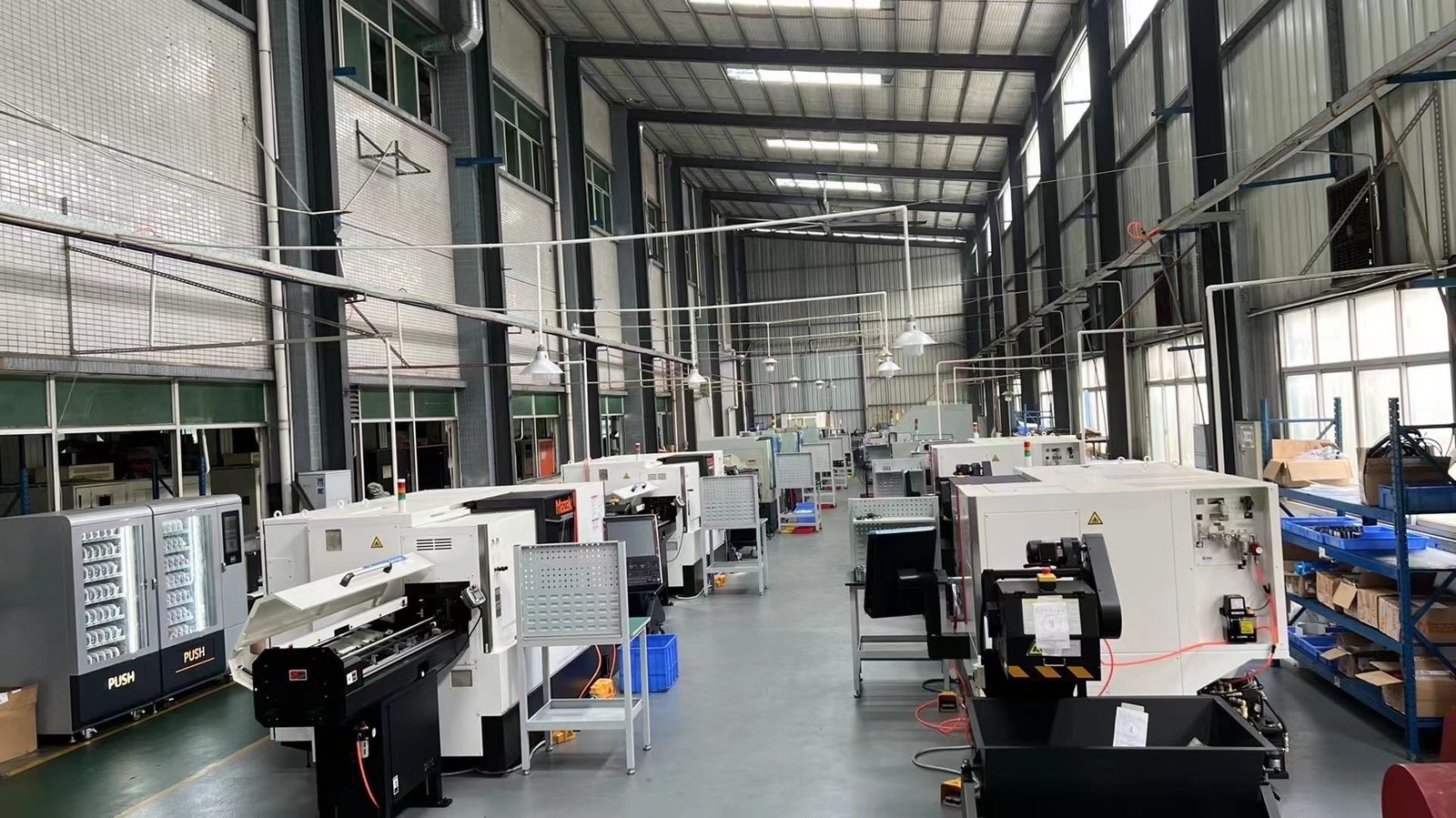
- 100+ machines across milling, turning, mill-turn, Swiss-type turning, and grinding in one 6,800 m² facility.
- ±0.003 mm milling and turning; ±0.002 mm grinding, verified on Hexagon CMMs.
- MOQ 1 piece, with prototype, low-volume, and production service models.
1. Which machining services are offered?
The service covers the full metal-cutting range, so a part routes to the process that matches its geometry rather than being forced onto whatever machine happens to be free. The table maps each service to what it is best at.
| Service | Best for | Tolerance ceiling |
|---|---|---|
| CNC milling (3/4/5-axis) | Housings, brackets, plates, manifolds, prismatic parts | ±0.003 mm |
| CNC turning | Shafts, pins, bushings, fittings, round parts | ±0.003 mm |
| Mill-turn | Parts needing both turning and milling | ±0.003 mm |
| Swiss-type turning | Long, thin, small-diameter precision parts | ±0.003 mm |
| Precision grinding | Bearing seats, press-fit diameters | ±0.002 mm |
The capability that most often changes a quote is mill-turn. A part that needs both turned and milled features can be finished in one clamping, which removes the concentricity error that appears when a part travels from a lathe to a mill. When you brief the service, name the process family up front — an experienced shop routes the part to the right machine and the right price on the first pass.
2. Where does the DFM review fit into the service?
At the very beginning — before quoting, before programming, before any metal is ordered. The review is the step that separates a manufacturing service from a quoting desk, and it is the reason the final price is often lower than the first one you were quoted elsewhere.
A machining service that skips design review is selling you a gamble: it prices the drawing as drawn, and when a thin wall chatters or a deep hole wanders, the overage lands on you as a change order. A service that reviews first prices the part as it should be made — with the sharp corners radiused, the hole depth corrected, and the tolerance budget spent only where it matters. The difference in final cost between those two paths is routinely 20–40% on a complex part, and the review costs nothing.
Here, the review is performed by an engineer who reads the geometry against the actual machines and tooling on the floor, not against a generic checklist. That is the difference between a review that says "looks fine" and one that tells you exactly which feature is driving the price.
3. What does the DFM review report contain?
A useful review is a written list of specific findings, not a compliment. When you send a drawing, the review that comes back covers these questions, in writing:
- Sharp internal corners — a 90° internal corner cannot be cut by a rotating tool; the review tells you what radius to add.
- Thin walls and floors — any section below a practical minimum is flagged with a recommended thickness.
- Deep holes and pockets — depth beyond the practical ratio is flagged, with a stepped-diameter or shallower alternative.
- Thread relief — a thread that runs to a blind bottom is flagged for a relief groove.
- Undercuts — any feature the cutter cannot reach from above is flagged for redesign or special tooling.
- Tolerance budget — the review identifies which tight callouts are functional and which are inherited from a default.
- Process capability — any dimension the process cannot reliably hold is named before cutting, so you decide whether to loosen it or pay for a secondary operation.
The honest part: if the review finds something that will cost you money, you hear about it before you spend it. A manufacturer that flags a problem before quoting is working for your margin; one that quotes blind is working against it.
4. How do you request and receive the service?
The service follows a short, fixed sequence, and every step is built to de-risk the next.
- Send the model and drawing. STEP or IGES plus a PDF drawing with materials, tolerances, and finish. These are the contract of record.
- Receive the DFM review and quote. An engineer returns written findings together with the price, usually within one business day.
- Approve or adjust. One round of feedback at this stage removes more cost than the entire machining margin on most parts.
- Machining runs to the approved drawing. Critical dimensions are measured on CMMs, and the report ships with the parts.
- Secondary operations finish the job. Anodizing, plating, heat treatment, deburring, and marking are bundled so you receive finished parts.
There is no minimum order. You can start with a single prototype, confirm the process, and scale the same engagement into production, so the feeds, speeds, fixturing, and the exact interpretation of your drawing all carry forward instead of being relearned by a new vendor at your expense.
5. Which service models are available?
Machining is bought in four models, and choosing the right one changes your cost structure and risk profile. The table frames each model against what a buyer is really paying for.
| Service model | What you are buying | What matters most |
|---|---|---|
| Prototype | One to a few parts to validate fit and function | Speed and a clean first-article report |
| Low-volume production | Repeatable small batches on demand | Consistency and on-time delivery |
| Production | Long runs with process control and documentation | PPAP/APQP, SPC, and unit-cost discipline |
| Managed supply | Ongoing multi-part programs, one point of contact | Program management and traceability |
The continuity across models is worth more than convenience suggests. When the provider that made your prototype also makes your production parts, the process knowledge compounds instead of resetting, and a design change made for manufacturability at the prototype stage keeps paying off in every batch that follows.
6. How are secondary operations handled?
The service ships finished parts, not machined blanks, and it is honest about where each step happens. Surface finishing — standard and hard anodizing, zinc, nickel, silver, gold, and chrome plating, powder coating, painting, brushing, and mirror polishing — runs through qualified partners. Heat treatment is routed the same way: in-house ovens reach 500 °C, which covers aluminum aging and low-temperature steel stress relief, while higher-temperature work such as titanium stress relief is outsourced to a partner rather than attempted in-house.
Why this honesty matters to your DFM plan: a finish changes a dimension after machining. A service that plans for that shift in the review — adjusting the machined size so the finished size lands in spec — is one whose parts arrive right the first time. A service that treats finishing as an afterthought ships parts that measure fine at machining and drift out of spec at anodizing.
7. What should an RFQ include to get an accurate quote?
An RFQ is only as good as the information it carries. Four items turn a guess into a fixed-price quote in one round:
- A 3D model in STEP or IGES — the geometry the machine reads.
- A 2D drawing in PDF — the dimensions, tolerances, and finish calls that form the inspection contract.
- Material and finish — alloy grade and any anodizing, plating, or heat treatment, stated up front.
- Quantity and target date — prototype or production, and when you need it, so the lead-time tier (3, 7, or 30 days) is honest rather than assumed.
If you only have a sketch or a photo, expect a design conversation before a quote, and that is a good sign, because a service that quotes blind from a photo is guessing, and you pay for the guess later.
8. How does the DFM review change the number on the quote?
The review does not reduce the quote by discounting; it reduces it by removing work the drawing did not need to ask for. When a sharp corner becomes a radius, a bottomed thread gets a relief, and a cosmetic edge drops its tight callout, the part moves from a slow, special-tooling route to a standard one. Fewer setups, standard cutters, and faster feeds are what lower the number, not a thinner margin.
That is why a service that reviews first can hand you a price lower than a desk that quotes the same drawing blind. The desk prices the flaws in; the review prices them out. The difference is real, and it compounds: every change order you avoid is money that never appears on any invoice, which is the cheapest kind of saving because it is invisible in the best way. When you compare two quotes for the same part and one is markedly lower, ask what the lower shop saw that the higher one did not — the answer is usually a review that actually read the geometry.
9. What does prototype-to-production continuity actually save?
Buying a prototype and a production run from the same service is not a convenience — it is compound interest on process knowledge. The feeds and speeds that worked on the prototype, the fixture that held it, the interpretation of a vague tolerance, the exact way the drawing was read — all of it carries forward when the same shop runs the production batch. Hand the same job to a new vendor and you pay to relearn all of it, usually through the scrap you did not budget for.
The continuity also protects the DFM decisions themselves. A design change made for manufacturability at the prototype stage — the radius added, the hole shortened, the tolerance relaxed — keeps paying off in every production batch that follows, but only if the shop remembers why it was made. A new supplier sees the "easier" drawing and quotes it cold; the original shop sees the reasoning and builds on it. With a MOQ of 1 piece, that continuity is available for the price of a single part, which is the cheapest insurance a production program can buy.
10. How do you compare a machining service quote honestly?
Two quotes for the same part rarely break down the same way, and the differences are where cost hides. Read every quote against these five lines, and the honest one becomes obvious.
- Material line. Is the alloy named by grade, or just "aluminum"? A grade you can verify against a mill certificate is a real material; a family name is a guess.
- Process and setups. Does the quote say how the part is routed — mill, turn, mill-turn, grind — and how many clamps it needs? A quote that hides the routing is hiding the cost driver.
- Tolerance handling. Does the quote acknowledge which tolerances are tight and how they will be proven? A service that quotes ±0.003 mm with a CMM and SPC is committing to something measurable.
- Finishing and heat treatment. Is anodizing, plating, or heat treatment priced in, and is the routing stated (in-house or partner)? A finish that is assumed but not priced is a change order waiting to happen.
- Lead-time tier. Is the date named as 3, 7, or 30 days and tied to the process steps, or is it a single vague number? An honest tier reflects the actual work; a vague date is a placeholder.
A quote that is transparent on all five lines lets you compare services on real terms. A quote that is vague on any of them is asking you to take the most expensive part of the service — the cost of it — on faith.
Frequently Asked Questions
What CNC machining services do you provide?
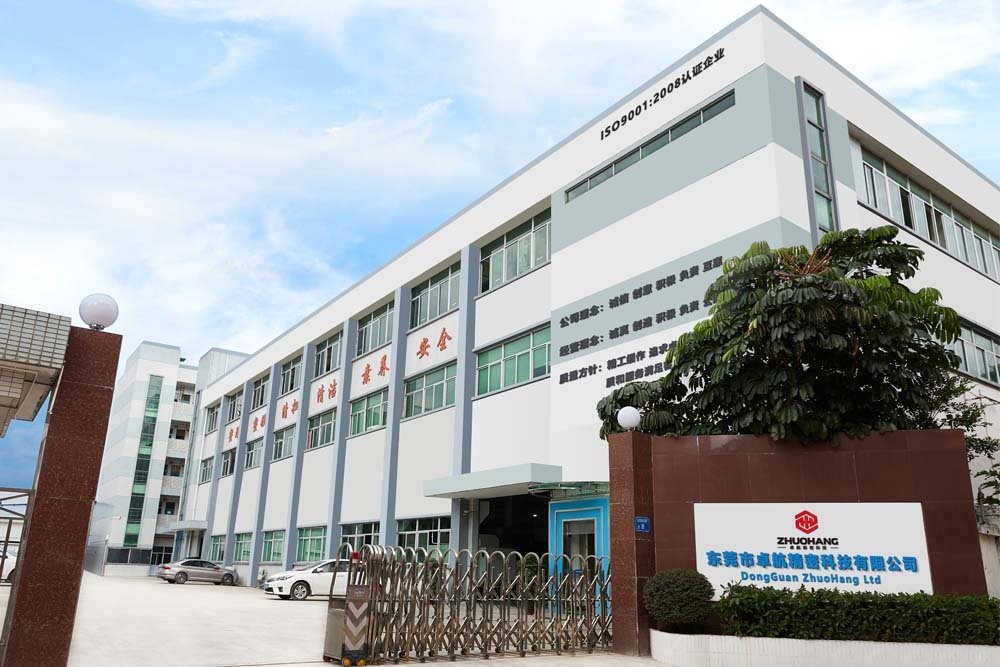
CNC milling (3, 4, and 5-axis), CNC turning, mill-turn machining, Swiss-type turning, and precision grinding, plus bundled secondary operations. The facility runs 100+ machines across a 6,800 m² plant in Dongguan, China.
Do you review my design before quoting?
Yes. Every quote begins with a design-for-manufacturability review. An engineer checks wall thickness, internal radii, hole depth, thread relief, and tolerance callouts, and returns notes on what is hard to machine and what a change would save.
Is there a minimum order quantity?
The MOQ is 1 piece. Prototype and single-part orders are accepted, and the same service scales into production as volume grows, so the DFM knowledge and process parameters carry forward instead of being relearned.
How fast do you quote and deliver?
A quote typically returns within one business day of a complete drawing. Lead time is roughly 3, 7, or 30 days depending on part complexity and the number of process steps; parts with surface finishing fall into the longer tier.
What tolerances can the service hold?
±0.003 mm for milling and turning, and ±0.002 mm for precision grinding. Critical dimensions are verified on Hexagon CMMs, with process capability Ppk ≥ 1.67 at the initial study on key characteristics and Cpk ≥ 1.33 on general characteristics.
Can you handle parts that need both milling and turning?
Yes. Mill-turn centers machine both operations in a single clamping, which removes the concentricity error that appears when a part moves between a lathe and a mill — the difference between a tolerance on paper and one the process can prove.
Do you handle surface finishing and heat treatment?
Yes, through qualified partners stated up front. Anodizing, plating, powder coating, painting, brushing, and polishing are bundled; in-house ovens reach 500 °C, while higher-temperature heat treatment such as titanium stress relief is outsourced.
How do I get a quote?
Email your STEP or IGES model and a PDF drawing to [email protected]. An engineer returns a design-for-manufacturability review together with the quote, usually within one business day, flagging any feature that is hard to machine.
Get your drawing reviewed before you pay to machine it.
Send your model to [email protected] or call +86 13126536955 for a DFM review and quote.