
Custom Machining Services vs Alternatives: Which Material-Process Pair Wins Your Part?
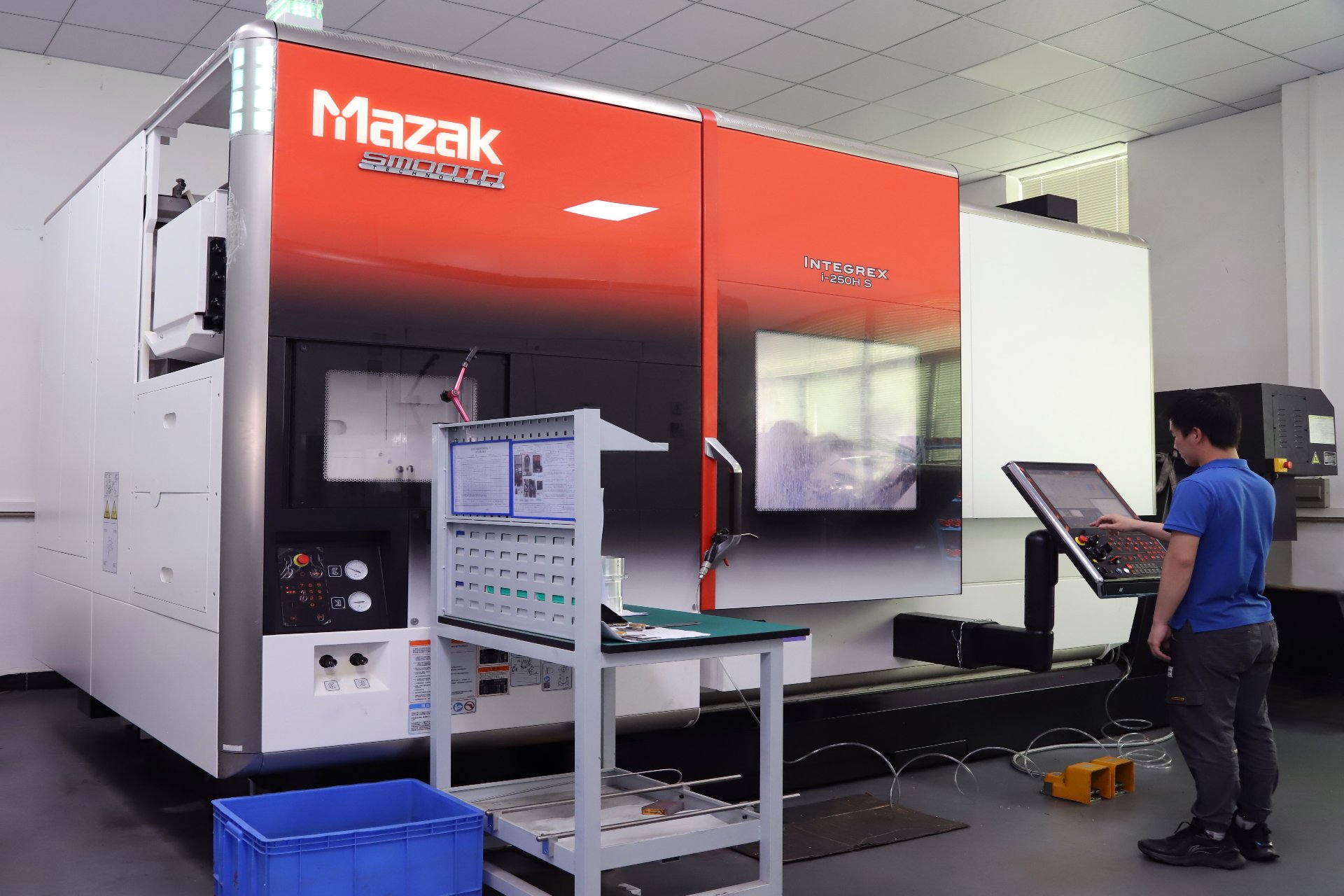
Every machined part could have been made another way, and the other way is sometimes better. CNC machining is the reference process — the one that delivers tight tolerances in engineering metals with a fast path from prototype to production — but it is not always the right answer. Injection molding wins at volume on plastic parts; die casting wins on aluminum parts at very high volume; 3D printing wins on complex geometries that would take many setups to machine or cannot be machined at all; sheet metal wins on thin-walled enclosures.
What does CNC machining actually win at?
Start with the reference process so the comparison has a baseline. Custom CNC machining wins when the part needs engineering metals — aluminum, stainless steel, titanium, alloy steel — held to real tolerances with real measurement behind them. Milling and turning hold ±0.003 mm on critical features and precision grinding reaches ±0.002 mm, verified on CMMs with process capability at Ppk ≥ 1.67 at the initial study on key characteristics and Cpk ≥ 1.33 on general characteristics. Capability is reported per characteristic: every report names the feature, its tolerance band, the sample size, the sigma method, and the study window. No alternative process in the comparison holds that band in those materials without a secondary machining step.
Machining also wins on the path from prototype to production, because the same machines run both. With a minimum order of one piece, a custom machining service can cut a prototype, measure it, and scale the same process into production without re-qualifying a new process family. That continuity is the quiet advantage: the toolpath, the fixture, the inspection plan built for the prototype carry into the run. A part that starts as a casting or a molding and then needs machined features is paying for two process families and the handoff between them.
The honest boundary is that machining is subtractive and per-part: every part carries its machining time, so the economics improve with complexity only up to a point, and very high volumes on simple parts eventually favor a process that amortizes tooling instead of paying per part. The decision table below maps the conditions that point away from machining toward each alternative.
When does 3D printing beat machining, and when does it not?
3D printing (additive manufacturing) wins on geometry that machining cannot reach economically or at all. An internal lattice, a conformal cooling channel, an organic topology-optimized bracket — these are additive's home ground, since they cannot be cut, or would need a number of setups large enough to make the machining quote absurd. For a prototype that exists to check fit or ergonomics rather than production process, printing is also fast and cheap, which is why it dominates early-concept models.
Printing loses on the dimensions that matter to production. A printed metal part is not the same material as a machined one: the layer structure, the porosity, and the surface finish (typically Ra 6 µm and rougher as-printed) mean the printed part is a different product with different mechanical behavior. Where the design needs a bearing surface, a sealing face, or a tight positional tolerance in a structural metal, printing produces the near-net shape and machining produces the part. The common pattern is not either/or but both: print the complex core, machine the critical features, which is why additive-plus-machining hybrids are the fastest-growing corner of the industry.
The buyer's rule is to ask what the part must do. If it carries load in a structural metal at a real tolerance, machining wins. If it needs an internal geometry that cannot be cut, printing wins, and the drawing should say which features are machined reference surfaces and which are printed, so the hybrid quote is unambiguous.
When does injection molding beat machining on plastic parts?
Injection molding wins on plastic parts at volume, and the crossover point is where the tooling cost amortizes across enough parts. A molded part carries its tooling cost once and then a low per-part cost, so the economics flip somewhere in the low thousands of parts for a simple geometry — the exact crossover depends on the part size, the material, and the tooling complexity. Machining, by contrast, has no tooling hurdle but pays per part forever, which is why it dominates low volumes and prototypes.
Molding loses on tolerance and material range. A molded plastic part holds a looser tolerance than a machined one — typically ±0.1 mm or looser on most features — because the material shrinks as it cools and the mold wears. And the engineering plastics that machine cleanly, like PEEK and Delrin, are a subset of what can be molded. Where a plastic part needs a tight bore that a metal insert will press into, or a feature that must hold position against another component, the drawing often calls for machining even at moderate volume — either machining the whole part or machining critical features on a molded blank.
The buyer's rule is to compare the machined quote against the molded quote at the real annual volume, including tooling. Below the crossover, machining wins on cost and tolerance; above it, molding wins on per-part cost, and the part with machined critical features on a molded body is often the best of both.
When does die casting beat machining on aluminum?
Die casting wins on aluminum parts at very high volume — tens of thousands of parts and up — where the die cost amortizes across the run and the per-part cycle time drops far below machining. A die-cast housing or bracket comes out of the die near-net, with thin walls that would be slow to machine from solid. At automotive and appliance volumes, casting is the process the economics demand.
Casting loses on tolerance, porosity, and lead time. A die-cast part holds a looser tolerance than a machined one and carries internal porosity that machining from solid bar does not have; a casting that needs a sealing face or a bearing bore is almost always machined after casting. And the die itself is a long-lead, high-cost item — weeks of tooling time and a five-figure investment before the first part — so casting is wrong for prototypes and low volumes.
The buyer's rule is that casting is a volume play, not a geometry play. At very high volume, cast-then-machine beats machine-from-solid on cost. Below that volume, or where the part must hold tight tolerances in solid material without porosity, custom machining is the answer. A part that needs both is machined after casting, so the comparison is rarely either/or at the feature level.
When does sheet metal beat machining on thin-walled parts?
Sheet metal fabrication wins on parts that are fundamentally thin-walled enclosures, brackets, and panels. A sheet-metal part is cut, bent, and formed from flat stock, so a thin-walled box or chassis that would take hours to machine from solid is produced in minutes from a sheet. For electronics enclosures, chassis, and light structural brackets, sheet metal is often the lower-cost answer at any volume.
Sheet metal loses on thickness, precision, and geometry. It cannot produce a thick, solid feature — a boss, a block, a bearing housing — because it starts as a thin sheet. Its tolerances are looser than machining's, particularly across bends where springback moves the geometry. And features that need real precision — a tight bore, a datum face — are machined onto the sheet-metal part in a secondary operation. The pattern is the same as casting: fabricate the thin structure, machine the critical features.
The buyer's rule is to match the process to the part's dominant geometry. A thin-walled enclosure belongs to sheet metal; a solid precision component belongs to machining; a hybrid with thin walls and machined bosses belongs to both, and the quote should show the fabrication and the machining as separate lines.
How do you compare a machined quote against an alternative fairly?
The trap in comparing processes is comparing the wrong numbers. A machined quote and a molded quote look alike on paper — both have a unit price and a lead time — but they are pricing different things: the machined quote prices per-part time, the molded quote prices per-part time plus amortized tooling, and the printed quote prices machine time on a very different cost base. The comparison only means something when three things are held constant: the tolerance the part must hold, the material the part must be, and the volume the part will run at.
Run the comparison as a total-cost table, not a unit-price race. For each process, list the tooling or setup cost, the unit price at your volume, the lead time to first parts, the tolerance the process holds without secondary work, and the material properties the process delivers. A machined part at ±0.003 mm in 6061-T6 is a different product from a die-cast part at ±0.3 mm in A380 — if the application needs the tolerance and the material, machining is not more expensive; the other processes simply cannot quote the same part.
The design-for-manufacturing guide on this site walks how a drawing is read against machining capability, and the parts page shows what a machined custom part carries in tolerance and inspection. The process decision is the first fork in that path, and it is worth making deliberately: match the process to the volume, the geometry, and the tolerance the part actually needs, and the material-process pair that wins is the one that delivers the real requirements at the lower total cost.
Frequently Asked Questions
When should I choose CNC machining over 3D printing?
When the part must be an engineering metal at a real tolerance, or carry load, seal, or mate against another part. Machining holds ±0.003 mm in aluminum, stainless, and titanium with verified measurement; as-printed parts are a different material with different mechanical behavior. Choose printing for internal geometries that cannot be cut, and machine the critical features of a printed blank.
When does injection molding beat machining?
At volume on plastic parts, where the tooling cost amortizes across enough parts to drop the unit price below machining. Below the crossover — typically the low thousands of parts for a simple geometry — machining wins on cost and tolerance. Parts needing machined critical features on a molded body combine both.
Is die casting cheaper than CNC machining?
At very high volume — tens of thousands of parts — die casting wins on per-part cost after the die is paid for. At lower volume, the die cost and lead time make machining the better answer, and a casting that needs a sealing face or bearing bore is machined after casting anyway.
Can 3D-printed metal parts replace machined parts?
Not for parts that need a bearing surface, a sealing face, or a tight positional tolerance in a structural metal. Printed parts carry layer structure, porosity, and rough as-printed surfaces; the production answer for a critical metal part is machining, or printing the complex core and machining the reference surfaces.
Why is a machined quote more expensive than a molded quote per part?
Because the machined quote prices per-part machining time with no tooling hurdle, while the molded quote prices a low per-part time against a tooling investment. At low volume the machined part is cheaper in total; at high volume the molded part wins once the tooling amortizes. Compare total cost at your real volume, not unit price alone.
Which process holds the tightest tolerance?
CNC machining, by a wide margin — ±0.003 mm on critical milled and turned features, and ±0.002 mm on ground surfaces, verified on CMMs with process capability at Ppk ≥ 1.67 initial. Molding, casting, and printing all hold looser tolerances without secondary machining.
Can I prototype in machining and then move to casting or molding?
Yes, and it is a common path, but the prototype must carry the production tolerance logic, because a prototype machined loose validates the geometry, not the process that will make the production part. If the production part will be cast or molded with machined critical features, the prototype should prove that hybrid process, not a pure-machined one.
What should I send to get an honest process comparison?
Send the 3D model, the drawing with the critical tolerances and materials named, and the annual volume. The reply should recommend a process or a hybrid based on the volume, geometry, and tolerance, and quote the real requirements at total cost, not a unit-price race between processes that are making different parts.
Not sure whether your part should be machined, printed, cast, molded, or fabricated?
Send the 3D model, the toleranced drawing, and the annual volume to [email protected] or call +86 13126536955. The reply will include a process recommendation or a hybrid plan, and a quote for the material-process pair that delivers your real requirements at the lower total cost.