
Custom Machining Services Lead Times: What Drives Them and How to Plan the Date
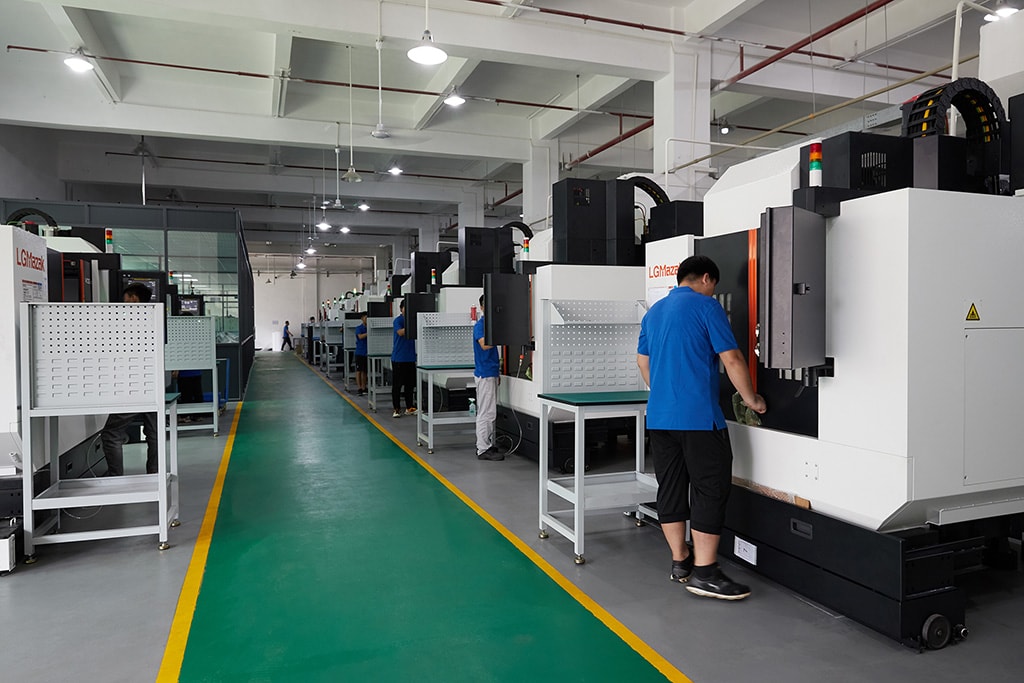
On a custom machining order, lead time is the DFM review written on a calendar. The same design habits that decide roughly 80 percent of a machined part's cost — wall thickness, corner radii, hole depth, tolerance callouts — also decide how many process steps the part needs, and the number of process steps is what sets the clock. A part that machines cleanly from a drawing that was reviewed for manufacturability ships in days; a part that fights every operation ships in weeks, not because the shop is slow but because the geometry demanded more work. This guide connects those two halves of the same decision. It explains what actually sits inside a custom-machining lead time, why the 3 / 7 / 30-day tiers exist, and how to use the DFM review — the one step that happens before any machine runs — to plan a date you can hold.
Why does a quoted lead time depend more on the drawing than on the shop's schedule?
Most buyers imagine lead time as a queue: the shop is busy, your part waits its turn, and the date is whatever the schedule allows. The queue exists, but it is rarely the dominant term. What actually decides whether your part ships in roughly three days or takes thirty is the number of operations the geometry requires, and that number was fixed the moment the drawing was frozen. Every feature on the part — every pocket, hole, thread, and toleranced surface — is a step the machine must execute, and the DFM review exists to count those steps before they are paid for.
That is why the same factory can quote one part at three days and another at thirty. The difference is not favoritism or spare capacity; it is the process-step count written into each drawing. A simple bracket with a few holes and no finish is a three-day part because it needs a handful of operations. A housing with deep pockets, tight bores, and a surface finish is a thirty-day part because it runs ten to twenty steps, each with its own setup, tooling, and inspection. The drawing decides the count, and the count decides the date, which is why the fastest lead-time tool in existence is applied before the RFQ, not after it.
Where does the time actually go between your RFQ and the shipment?
Once a custom-machining quote commits to a delivery date, the intervening calendar splits into the same three stages every time, and reading that split tells you which part of the date is genuinely compressible:
- Engineering and quoting. The drawing is reviewed for manufacturability — the DFM pass that flags wall thickness, internal radii, hole depth, and thread relief issues before they cost money. The program is planned, the toolpaths are written, and the quote is built from the operation count. On a clean drawing this block is short; on a drawing with hidden conflicts it stretches while the shop asks questions.
- Machining and process time. The actual cutting time on the floor, plus the waiting between operations. This is where the process-step count bites: each step has a setup, each setup has a tool change, and each tool change is minutes on the calendar. Deep pockets run slow tools, tight tolerances run finishing passes, and both add real time.
- Finishing, inspection, and shipping. Surface treatment, heat treatment, and final verification. Secondary operations — anodizing, passivation, electropolishing, heat treatment — run as batch processes that may route through qualified partners, and a batch process has its own queue and its own minimum. The DFM review matters here too, because a drawing that avoids an unnecessary finish keeps the part out of the second clock entirely.
A buyer who knows these three blocks can read any lead-time quote and see which block is doing the work. A quote that is mostly machining time is a geometry problem; a quote that is mostly finishing time is a specification problem; a quote that is mostly engineering time is a drawing-readiness problem. Each one has a different fix, and the DFM review addresses all three before the order starts.
Which custom-machined parts fall into the 3-day, 7-day, and 30-day tiers?
The tier system is not a marketing ladder; it is the process-step count expressed in days. Parts sort themselves into the tiers by how much work the geometry demands, and the pattern is predictable enough to plan around:
- Roughly 3 days — the simple tier. Parts with few operations and no finishing. A flat plate with holes, a simple bracket, a turned bushing with one or two features. The drawing is clean, the DFM review is short, and the part moves through the floor in a small number of steps. This is the tier where a drawing reviewed before quoting pays off fastest.
- Roughly 7 days — the standard tier. Parts with multiple operations — several faces machined, a mix of milling and turning, a moderate number of features. These parts need more setups and more tool changes, but they stay inside the machining family. A 7-day part is where most well-designed production components live.
- Roughly 30 days — the complex tier. Parts that run ten to twenty process steps, or that carry surface finishing or heat treatment. Deep pockets, thin walls, tight tolerances across multiple features, and any secondary operation push a part into this tier. The DFM review's job on a complex part is to make sure every one of those steps is necessary and no step is fighting the design.
The useful way to read the tiers is not as a promise but as a diagnostic. If a part you expected in the 7-day tier keeps landing in the 30-day tier, the drawing is carrying operations that a DFM review would flag, and the review is cheaper than the extra two weeks. Note that the tiers are driven by process steps, not by precision: on this floor the same capability runs across all three — ±0.003 mm on milled and turned features, ±0.002 mm on precision-ground surfaces, with key characteristics held at Ppk ≥ 1.67 initial — so a part does not ship slowly because it is accurate, but because its geometry demands more operations.
How does the DFM review shorten the critical path before any machine runs?
The DFM review is the most effective lead-time tool a custom-machining buyer has, because it operates on the part's process-step count before a single chip is cut. An engineer reads the drawing and flags the features that will add operations, and each flag removed is time removed from the calendar:
- Internal corner radii. A sharp internal corner cannot be cut by a rotating tool; it forces a smaller end mill, a slower feed, and often a separate finishing pass. Specifying a radius that matches an off-the-shelf cutter lets one standard tool do the work. The schedule effect is real: a radius fix can remove an entire operation class from the routing.
- Wall thickness and thin sections. A wall too thin for its height deflects under cutting force and chatters, which forces slower feeds and raises scrap risk. A drawing that stiffens the section — or states the wall thickness honestly — keeps the part cutting at normal speed instead of creeping through every pass.
- Hole depth and diameter ratios. Deep holes run peck cycles that spend most of their cycle time retracting; holes deeper than roughly four to five times their diameter leave the standard-drill regime. Keeping holes within standard depth-to-diameter ratios keeps standard tooling and standard cycle times on the job.
- Tolerance callouts. Every tight tolerance adds a finishing pass and an inspection step on that surface. Call out the functional characteristics only and let the rest ride a general tolerance such as ISO 2768; a tolerance that carries no function is a step the drawing added for no reason.
Each of these is a small change, and together they are the difference between a part that machines in a handful of steps and one that needs ten to twenty. The DFM review catches them before quoting, which means the shop plans the faster routing from the start rather than discovering the slow one mid-run.
Why do surface finishing and heat treatment add a second clock?
Machining runs on one clock; finishing runs on another. A surface treatment or heat-treatment step is a batch process — parts are grouped with other parts, loaded into a run, processed, and unloaded — and a batch process has its own queue and its own minimum run size. That is why any finishing or heat-treatment requirement pushes a part toward the longer tier regardless of how fast the machining itself goes.
The DFM connection is direct: the drawing decides whether the part enters the second clock at all. Anodizing, passivation, electropolishing, and heat treatment are specification choices, and each one adds a partner step with a schedule of its own. A part specified without a finish stays entirely on the machining clock. A part that genuinely needs treatment for its application pays the batch-process price, and the buyer who knows the price in advance plans around it instead of discovering it at quote time. Ask which operations run in-house and which route through qualified partners; the answer is a map of where your lead time can stretch.
What can quantity do to your lead time, and what can it not do?
Quantity is the part of the lead-time story buyers most often misunderstand. Ordering more parts does not automatically mean waiting longer, and ordering a single prototype does not guarantee speed. What quantity changes is not the process-step count — the same geometry needs the same operations whether you order one piece or ten thousand — but how those steps are organized:
- The first article carries the setup time either way. Programming, tooling, and first-article inspection are paid once per order. On a one-piece prototype that fixed time is the whole job; on a production run it is spread across many parts. The calendar cost of that first article is identical; what changes is how it is priced per unit.
- Volume buys automation, not speed on the first part. At sufficient quantity a shop can justify bar-fed machining, palletized loading, and dedicated fixtures that run unattended. Those reduce the per-part cycle time and improve consistency, but the first article still has to be programd and proven before the automated run begins.
- A prototype and a production run can share the same process. This factory accepts a single prototype at MOQ of one piece and scales into production from the same floor — the process knowledge from the first article does not get lost when the job grows, because the same engineers, the same machines, and the same work instructions carry through.
The planning consequence: if your program needs parts by a fixed date, order the first articles early enough to absorb the setup time, and let the production run follow from proven process rather than from a fresh start. The custom machining service guide on this site walks the request-to-delivery flow, and the custom machining factory page explains how the equipment floor and its capacity shape what a lead-time promise can actually hold.
How do you plan a custom-machining order around a fixed launch date?
A launch date is a commitment made before the lead-time conversation starts, and the discipline is to work backward from it in four moves:
- Get the DFM review before you freeze the design. The review costs days at most and can save weeks at the end. A drawing reviewed for manufacturability is a drawing that machines at its planned speed; a drawing that reaches the floor with hidden conflicts discovers them mid-run, when the schedule has nowhere left to flex.
- Name the finish and treatment requirements up front. Surface finishing and heat treatment run on the second clock, and naming them in the RFQ means they are priced and scheduled from the start rather than discovered as a surprise extension. If the finish is cosmetic, say so; the review may show it can wait.
- Order first articles early. The setup and first-article work happens once per order, and it is the part of the calendar that cannot be compressed by volume. Order the first articles early enough to absorb it, validate the parts, and let the production run start from a proven process.
- Ask for the tier, not just the date. A shop that answers in the 3 / 7 / 30-day tier language is showing you the schedule logic, which operations, which finishing steps, which complexity is pushing your part. A shop that answers only "we can do it" has not priced the schedule, and the schedule is what you are planning around.
Work backward from the launch date, and every decision — the drawing, the finish, the first-article timing — lands in the right place on the calendar. The main custom machining DFM guide on this site explains the full design-for-manufacturability review that drives this planning, from the six DFM rules to how a review pass reads a real part.
Frequently Asked Questions
What are typical lead times for custom-machined parts?
Lead time is roughly 3, 7, or 30 days depending on part complexity and process steps. Simple parts with few operations and no finishing ship in about 3 days; standard parts with multiple operations run about 7 days; complex parts running ten to twenty steps, or with surface finishing or heat treatment, take about 30 days.
Why does a part I thought was simple keep quoting at 30 days?
Because the drawing carries more operations than the part's appearance suggests. Deep pockets, thin walls, tight tolerances across several features, and any surface finish each add steps, and the step count is what sets the tier. A DFM review before quoting can flag which features are adding the steps, and which can be changed to bring the part back into a faster tier.
Can a DFM review really shorten my lead time?
Yes, because it reduces the process-step count the schedule is built from. Fixing an internal corner radius, thickening a too-thin wall, keeping holes within standard depth ratios, and tolerancing only the functional features each remove operations from the routing, and removed operations are removed days. The review happens before any machine runs, so the faster routing is planned from the start.
Why does surface finishing add so much time?
Because finishing runs as a batch process with its own queue and minimum run size. Anodizing, passivation, electropolishing, and heat treatment group parts together, process them in runs, and may route through qualified partners — each with its own schedule. Specifying a finish deliberately, and only when the application needs it, keeps the part on the faster machining clock.
Does ordering more parts make the lead time longer?
Not necessarily. The process-step count is the same whether you order one piece or a thousand; what changes is how the fixed setup and first-article time is spread. At volume a shop can add automation — bar-fed machining, palletized loading — that cuts per-part cycle time, but the first article still has to be programd and proven before the run starts.
What is the MOQ for a custom machining order?
One piece. You can order a single prototype, a short validation run, or a full production batch from the same floor, with the DFM review and process knowledge from the first article carrying through as the order grows. The first article absorbs the setup time either way, so plan for it in your schedule.
Which quality systems back a lead time you can hold?
A shop that quotes a date it can defend runs under documented systems: ISO 9001:2015 (certificate 116024/A/0001/UK/En), IATF 16949:2016 (product design excluded) (131941/A/0001/SM/En), and ISO 14001:2015 (116024/B/0001/UK/En). The systems force the discipline — material verification, first-article records, and process control — that keeps the schedule honest rather than improvised.
How do I get a lead-time quote I can actually hold to?
Send the full package — 3D model, toleranced drawing, material, finish requirements, and quantity — and ask which tier the part falls into and what is pushing it there. A shop that replies with the operation count and the finishing steps is showing you the schedule logic; one that answers only with a date has not priced the work.
Need a date you can hold, and a DFM review that protects it?
Send the drawing and your target date to [email protected] or +86 13126536955. The response includes a DFM pass that names what is adding time, the tier the part occupies, and a delivery date built on the operation count rather than a guess.